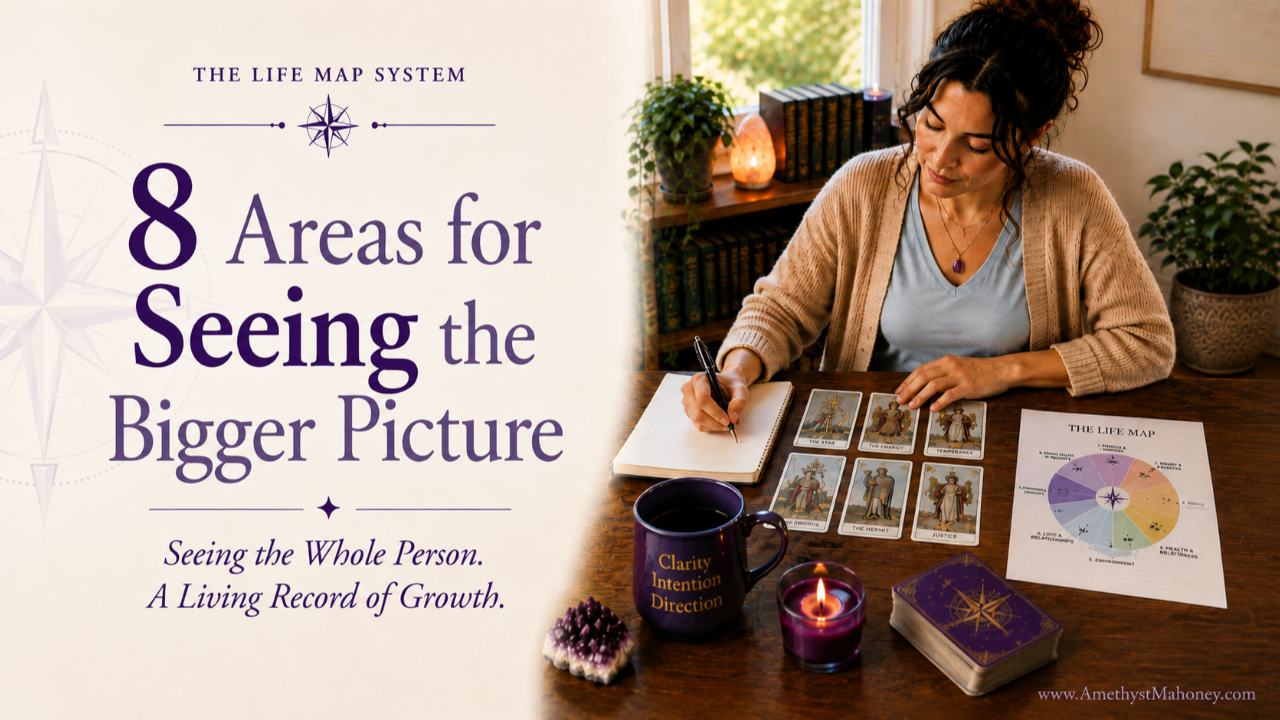
The Life Map System: 8 Areas for Seeing the Bigger Picture
Sometimes the problem you think you have isn't the only problem.
You might think you're struggling with your business, only to realize that you're exhausted, haven't had a day off in three weeks, and can't concentrate because your house has become one giant pile of things you keep meaning to deal with. Or maybe money is the thing keeping you awake at night, but financial stress is also affecting your relationship, your health, and how much time you have for anything you actually enjoy.
Our lives don't happen in neat little boxes, even though we often try to solve our problems as if they do.
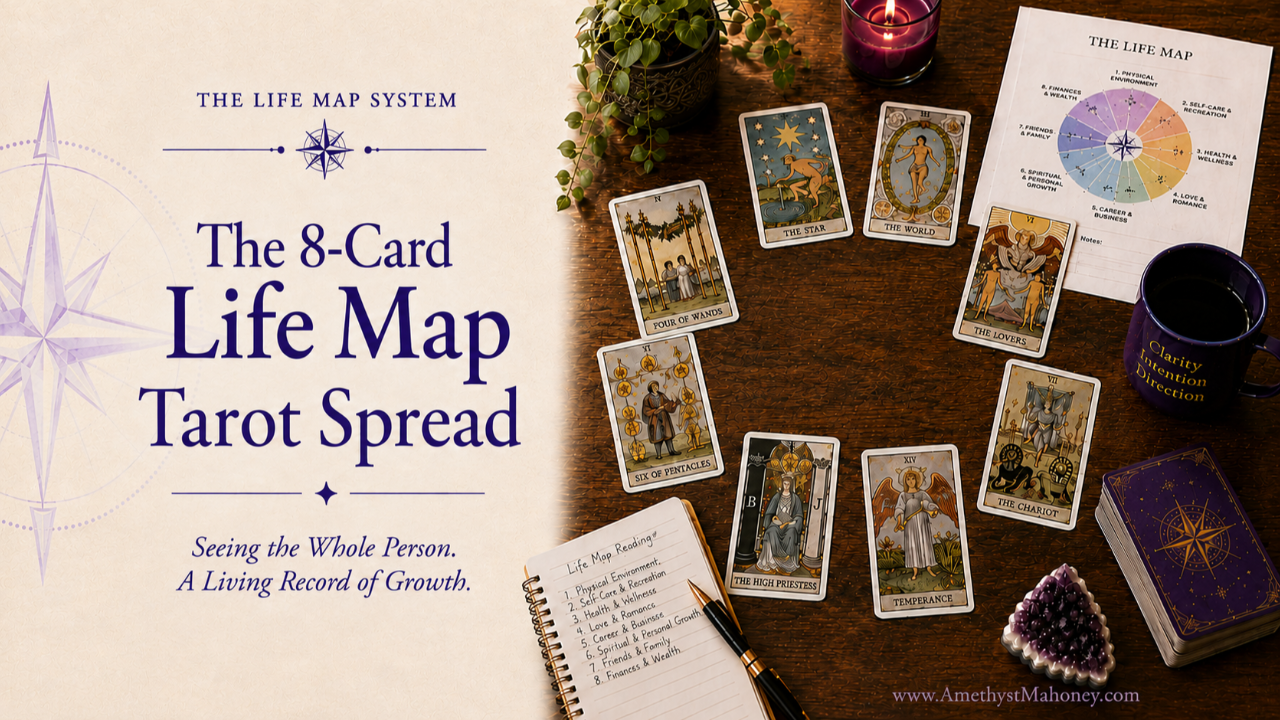
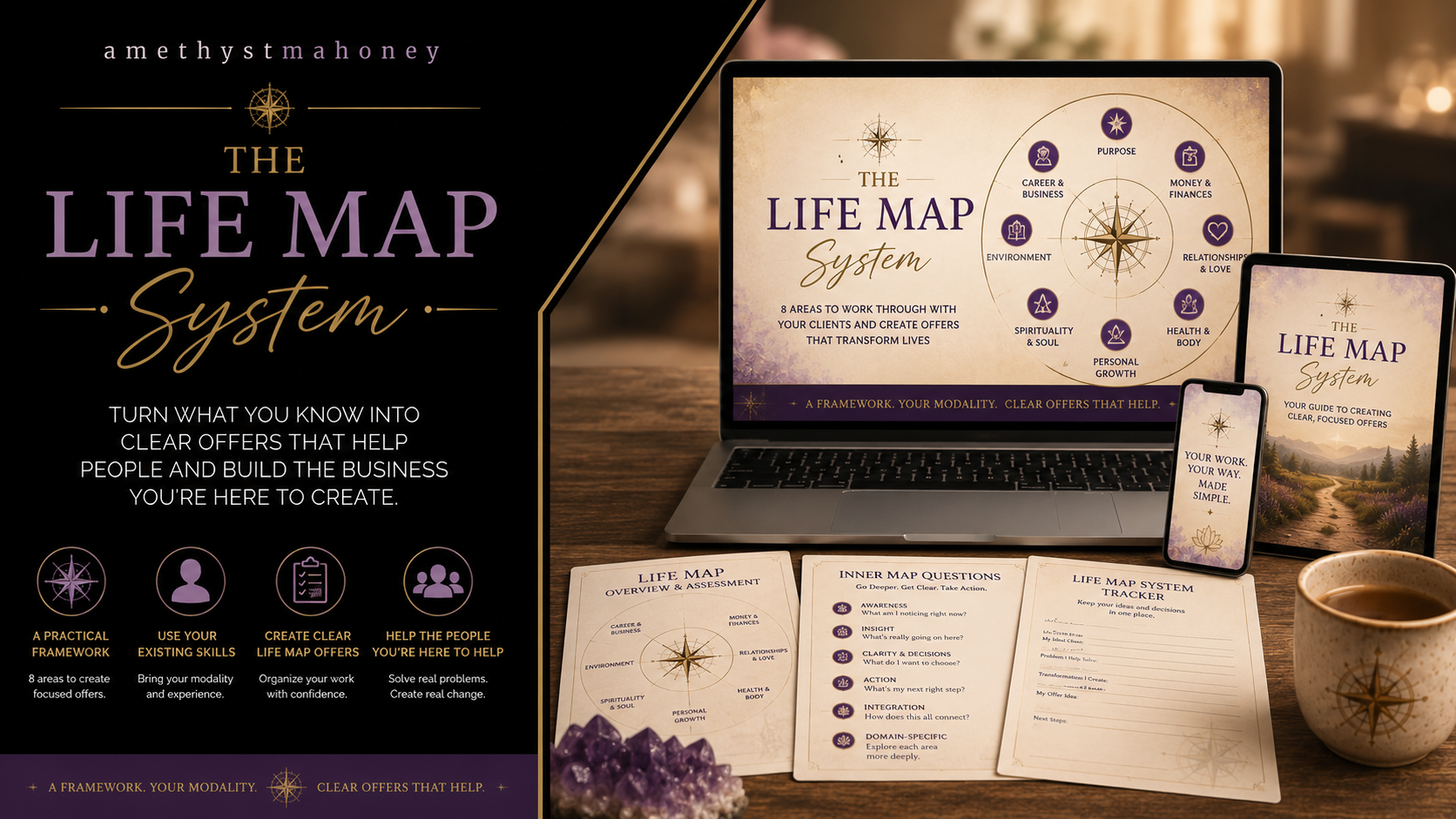
That's why I created the Life Map System. The Life Map is a practical framework for looking at eight interconnected areas of your life so you can see the bigger picture, notice what is working, recognize what needs attention, and decide where you want to focus next.
The goal isn't to fix everything. In fact, that's kind of the point.
The 8 Areas of the Life Map
The Life Map divides life into eight broad areas. Looking at them separately makes it easier to notice what's happening in each one, while looking at the entire map helps you see how those areas affect one another.
Together, they give you a way to look at your life without reducing everything to one problem—or turning your entire existence into one enormous self-improvement project.
Physical Environment
Your Physical Environment includes the places where you actually live your life: your home, neighborhood, community, workspace, and the larger environment around you. You might consider whether your environment feels comfortable and functional, whether you have enough privacy or space, whether clutter or unfinished projects are creating stress, or whether where you live supports the life you're trying to create.
This area is easy to underestimate because we tend to treat our surroundings as background scenery. But sometimes changing your environment changes far more than your environment.
Self-Care and Recreation
Self-care isn't just bubble baths, spa days, and whatever somebody is currently trying to sell you on Instagram. This area includes rest, recreation, hobbies, play, enjoyment, boundaries, and the things you do simply because being alive is occasionally supposed to be fun.
It can also reveal whether you've created a life in which you're constantly doing things for other people while treating your own needs like an optional extracurricular activity. Rest and recreation aren't rewards you earn after you've finally finished everything else. They're part of having an actual life.
Health and Wellness
Health and Wellness includes your physical, emotional, and overall well-being, along with the ways you care for and support your body. Depending on your circumstances, that might include nutrition, movement, rest, medical care, mental health support, managing chronic conditions, or simply paying attention to what your body has been trying to tell you.
The goal isn't to achieve some imaginary version of perfect health. Bodies are complicated, circumstances vary, and not everything can or needs to be "fixed." This part of the Life Map is about looking at your actual life and asking what care and support you need.
Love and Romance
Love and Romance includes intimate relationships, dating, partnership, communication, boundaries, intimacy, and patterns from previous relationships that may still be affecting you. It can help you explore both what is happening in your relationships now and what you've learned from the relationships you've had before.
And if you're single and perfectly happy being single, this section does not mean you need to run out and acquire a romantic partner so your Life Map can be complete. 😂 It's simply a place to explore this part of life when it's relevant to you.
Career and Business
Career and Business includes the work you do, the business you own, the work you want to do, and your relationship with purpose, contribution, and professional growth. For some people, that means a career. For others, it means entrepreneurship, caregiving, managing a household, volunteering, creative work, or figuring out what comes next.
This area isn't only about how conventionally "successful" you are. It's also about whether the work you're doing fits into the rest of your life and whether it supports - or interferes with - the life you're trying to create.
Spiritual and Personal Growth
Spiritual and Personal Growth includes your relationship with spirituality, meaning, curiosity, learning, healing, self-understanding, and personal development. That might involve prayer, meditation, Tarot, ritual, study, therapy, journaling, spiritual community, or something entirely different.
Growth doesn't always mean becoming a "better" version of yourself. Sometimes it means understanding yourself more clearly, questioning something you were taught, reclaiming something you lost, learning something simply because you're curious about it, or deciding that something no longer belongs in your life.
Family and Friends
Family and Friends includes biological family, chosen family, friendships, community, and the people with whom you share your life. Looking at this area can help you think about connection, support, loneliness, boundaries, conflict, belonging, and the overall quality of the relationships surrounding you.
Having more people in your life doesn't automatically mean this area should receive a higher rating. One deeply supportive relationship may contribute far more to your life than twenty people who leave you exhausted every time your phone rings.
Finances and Wealth
Finances and Wealth includes income, expenses, savings, debt, financial stability, resources, investments, and your beliefs and experiences around money. It can also include the messages you've received about what money means: whether wanting it is selfish, whether having it makes someone "bad," whether you feel safe managing it, or whether you've learned to believe there will never be enough.
Money doesn't exist separately from the rest of the Life Map. Your financial circumstances can influence where you live, what healthcare you can access, what you do for recreation, your relationships, your career choices, and countless other parts of your life.
You Don't Have to Work on All Eight Areas
Looking at eight different areas of your life can immediately create the impression that I am giving you eight new things to fix.
I am not. Please don't do that to yourself.
The purpose of the Life Map is to create awareness before deciding what, if anything, you want to change. One area may need your attention right now, while several others may be connected to it. Another area may be going wonderfully and require absolutely nothing from you.
Sometimes the most useful thing the Life Map shows you is that the area you've been obsessing over isn't actually where you want to put your energy next. At other times, you may discover that something you've been treating as a small annoyance is connected to several other challenges.
The Life Map gives you a way to look around before deciding where you want to go.
Try a Simple Life Map Self-Assessment
You don't need Tarot, a coaching session, or any special tools to begin using the Life Map. One of the simplest ways to start is to rate each of the eight areas from 1 to 10, with 1 meaning I really need to pay attention to this and 10 meaning this area feels great right now.
Don't spend twenty minutes arguing with yourself about whether something is technically a 6.3 or a 6.7. Use the first number that feels reasonably accurate, then look at the entire map rather than immediately trying to solve the lowest score.
Notice which areas received your lowest and highest ratings. Did anything surprise you? Do two or three areas seem to be affecting one another? Is there an area you've been telling yourself is a huge problem that actually feels pretty good when you stop and look at it? Is something else asking for more attention than you've been giving it?
Then ask yourself one more question:
Where do I actually want to begin?
The lowest number doesn't automatically win. Your Life Map gives you information about what's happening in your life. You still get to decide what you do with that information.
The Life Map Changes as Your Life Changes
Your Life Map isn't a personality test that tells you who you are forever. It's a snapshot of what your life looks and feels like right now.
If you revisit your ratings later, you may discover that an area you've been working on has improved, while something that barely registered six months ago suddenly needs attention. Over time, you may also begin to notice recurring patterns involving particular times of year, relationships, situations, or circumstances.
That makes the Life Map useful for noticing progress as well as problems. We can become so accustomed to looking for whatever needs to be fixed next that we completely miss evidence that something has gotten better.
A changing Life Map isn't evidence that you're doing it wrong. It's evidence that you're alive and your circumstances, priorities, relationships, needs, and interests continue to change.
One Framework, Different Ways to Use It
The eight areas provide the underlying structure of the Life Map, but the way you use that structure can change depending on what you're exploring. You can use the Life Map simply for personal reflection, revisit it periodically to see what's changed, or combine it with other tools and practices that are already part of your life or professional work.
This is also where it's helpful to distinguish the Life Map System itself from the different ways I teach people to use it. The Life Map System is the underlying eight-area framework. Tarot, Tarot Therapy, Religious Trauma, and Business are different applications of that framework.
As the Life Map continues to grow, there will probably be even more ways to use it. Because apparently I am incapable of creating one thing and then leaving it the hell alone. 😂
Using the Life Map With Tarot
Tarot can add another layer of exploration to the Life Map by helping you approach each area from a different perspective. A card may bring your attention to a pattern you hadn't noticed, give you language for something you've been feeling, or lead you somewhere completely different from where you expected to go.
I've created an 8-Card Life Map Tarot Spread specifically for exploring the entire map this way. Each card gives you an opportunity to look at one area of your life, while the completed spread lets you step back and notice patterns and connections across the whole thing.
The Life Map and Tarot Therapy
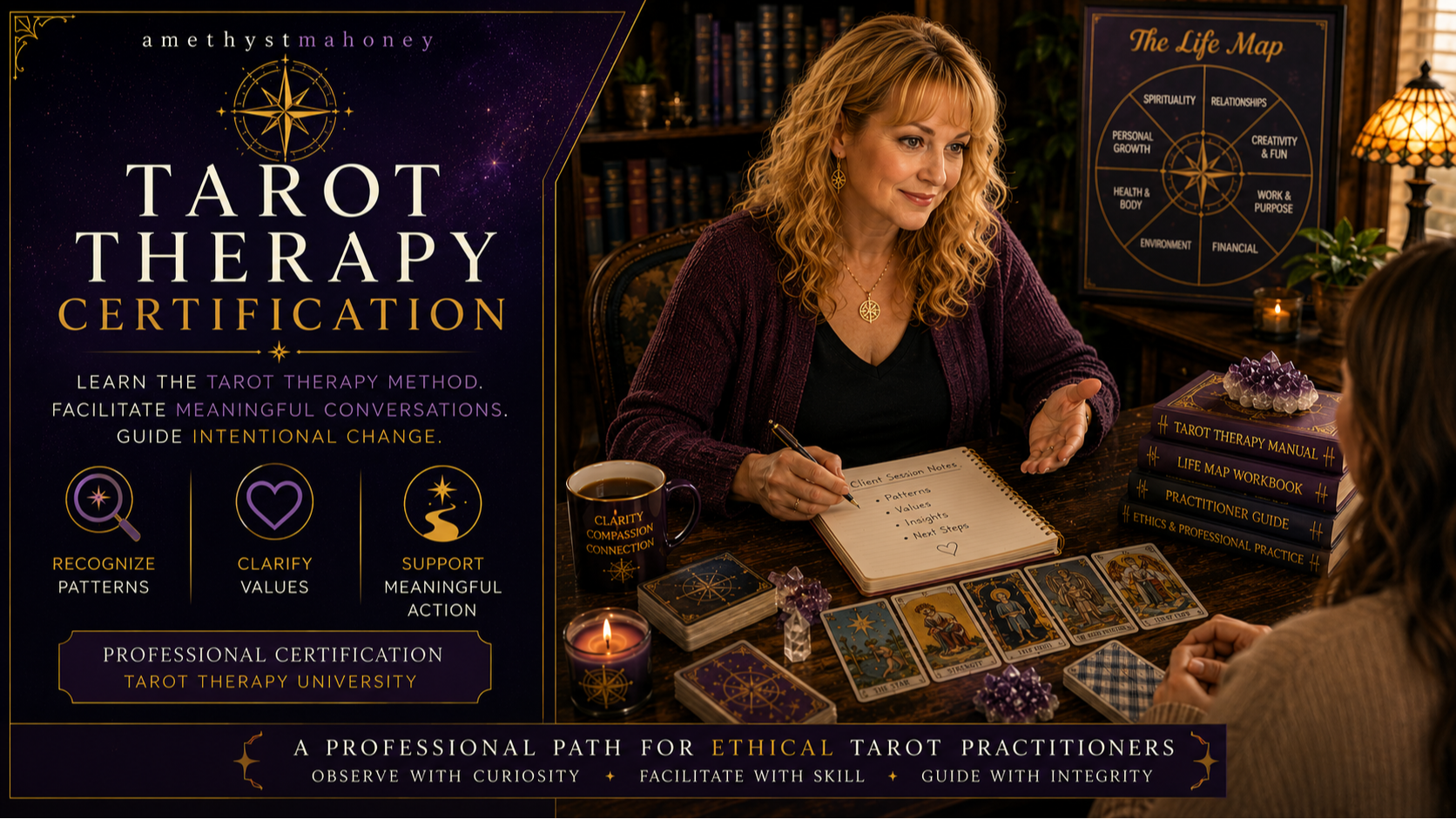
The Life Map also has a specific professional application within Tarot Therapy. Tarot Therapy Practitioners can use the framework to explore different areas of a client's life, notice connections between them, and help the client identify where they want to focus their work.
That professional application is taught separately in TTU 102: Life Map for Tarot Therapy as part of Tarot Therapy Certification Program. This distinction will become increasingly important as I continue developing specialized applications of the Life Map: the Life Map System is the framework; Life Map for Tarot Therapy is one professional application of it.
The Life Map and Religious Trauma
Religious trauma rarely affects only a person's religious or spiritual beliefs. It can influence family relationships, romantic relationships, friendships, sexuality, health, money, work, recreation, identity, spiritual practices, and even whether someone feels safe in particular places or communities.
Using the Life Map through a Religious Trauma lens allows us to look at those effects across different areas of life without assuming that everything needs to be addressed at once. Someone may be ready to explore spirituality but not family relationships, or they may discover that what they thought was primarily a spiritual issue has been influencing several other parts of their life.
I've created a separate Life Map System for Religious Trauma specifically for exploring the framework through this lens. You can find it in the Religious Trauma Workshop.
Using the Life Map in Your Business
The Life Map can also be used by Tarot readers, coaches, spiritual practitioners, energy workers, and other professionals who know they can help people but have trouble explaining exactly what they do.
This is an incredibly common problem for people whose work doesn't fit neatly into one box. You may know Tarot, Reiki, Human Design, meditation, coaching, spiritual guidance, or several different modalities. You may also know that you can help with relationships, money, spiritual growth, career decisions, confidence, boundaries, burnout, or seventeen other things.
The problem isn't necessarily that you need to learn something else. The problem may be figuring out how all of those possibilities fit together into something another person can actually understand.
The Life Map gives you a structure for doing that. A Tarot reader might create work focused on Love and Romance, while a business coach might work primarily with Career and Business and Finances and Wealth. Someone who works with burnout might bring together Health and Wellness, Self-Care and Recreation, and Career and Business.
The framework doesn't replace what you already know how to do. It gives that work somewhere to live.
If you'd like to learn how to use the Life Map to turn Tarot, coaching, spiritual guidance, energy work, or another modality into focused sessions, programs, and offers, that's exactly what I teach in The Life Map System Course.
The Bigger Picture
One of the reasons I've continued developing the Life Map over the years is simple: people are complicated. We can separate life into categories because categories make things easier to examine, but we don't actually live that way.
Your body goes to work with you. Your relationship comes home with you. Your financial situation affects the choices available to you, while your environment affects how you feel and function within those choices. Your beliefs influence what you think you're allowed to want, and the people around you can support your growth or make it considerably harder.
Everything doesn't affect everything equally, and every problem doesn't require some enormous whole-life intervention. But looking at the connections can help us understand why changing one part of life sometimes changes several others - or why repeatedly trying to fix one isolated problem doesn't seem to work.
The Life Map gives us a way to separate the pieces long enough to look at them while still remembering that they belong to one person living one interconnected life.
You don't have to work on everything, and you don't have to become perfect in eight different categories. You don't even have to choose the area with the lowest number.
The map isn't there to make your decisions for you.
The Life Map helps you see where you are so you can decide where you want to go next.