Religious Trauma Doesn't Always End When You Leave
You May Have Left the Religion.
But Did You Leave the Rules?
Religious teachings can continue influencing your relationships, choices, money, body, work, spirituality, and sense of self long after your beliefs have changed.
The Overcoming Religious Trauma Workshop and Books
A 70-minute guided workshop and four-book digital collection to help you understand what happened, recognize where religious trauma may still be affecting your life, and decide what belongs to you now.
Explore the Workshop and Books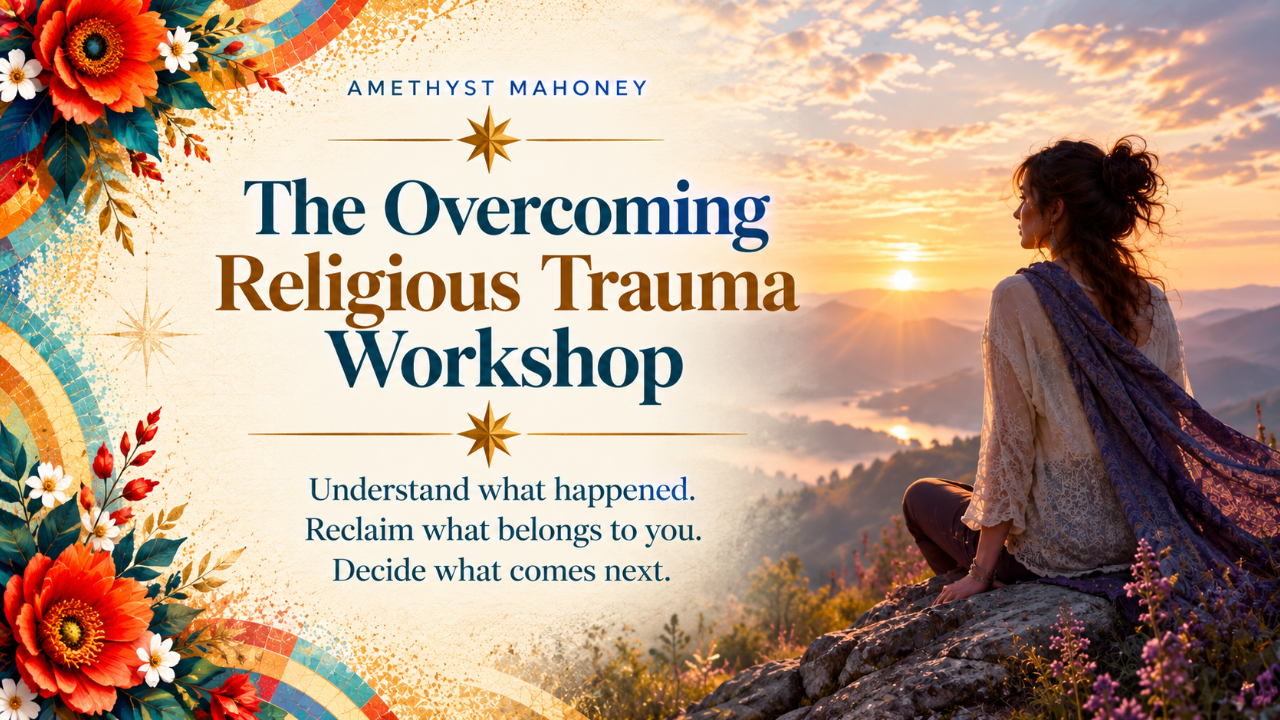
"I Thought I Already Dealt With This."
Maybe you left the church years ago.
Maybe you changed denominations, found another religion, built a spiritual practice that feels more like your own, became atheist or agnostic, or simply stopped believing many of the things you were taught.
You may have done a lot of questioning, learning, healing, and rebuilding along the way.
So why does some of it still seem to follow you?
Maybe you still feel guilty when you say no.
Rest can feel selfish, even when you desperately need it.
You second-guess your own judgment and look to other people for reassurance that you're making the “right” choice. You may still carry shame around your body, sexuality, desires, or relationships.
Wanting money, success, recognition, pleasure, or simply more for yourself can bring up discomfort you can't quite explain.
Setting boundaries with family can feel much harder than it seems like it should.
And maybe, despite everything you believe now, there's still a tiny voice that occasionally whispers:
But what if Hell really is real?
These things can seem completely unrelated.
A boundary problem. A money problem. A confidence problem. A relationship problem. A lingering fear you thought you stopped believing years ago.
But sometimes they're connected by something much older.
Changing what you believe doesn't automatically erase what you learned.
The rules we absorb about what makes us good, worthy, safe, lovable, acceptable - or even allowed to trust ourselves—can continue influencing our choices long after we've consciously rejected the beliefs they came from.
Overcoming religious trauma isn't only about examining what you believe today.
It's also about recognizing the old rules that may still be quietly shaping your life - and deciding whether they still belong to you.
Religious Trauma Doesn't Stay in Your Spiritual Life
When we think about religious trauma, it's easy to think primarily about religion.
What do I believe now? Do I still believe in God? Do I want a spiritual practice? Do I ever want to walk into a church again?
But religious trauma can affect areas of your life that don't seem religious at all.
Something you were taught about obedience might affect the boundaries you set in your relationships.
A message about sacrifice might make it difficult to prioritize your own health or take time for yourself.
Teachings about gender or sexuality may influence how you relate to your body, your partner, or what you believe you're allowed to want.
Ideas about money, humility, service, or your “God-given purpose” can follow you into your career and finances.
And teachings about family, authority, forgiveness, or belonging may continue shaping your relationships long after your beliefs have changed.
That's why the Overcoming Religious Trauma Workshop uses the Life Map to look beyond spirituality and consider your experience across eight interconnected areas of life:
- Physical Environment
- Self-Care & Recreation
- Health & Wellness
- Love & Romance
- Career & Business
- Spiritual & Personal Growth
- Family & Friends
- Finances & Wealth
The Life Map isn't there to tell you that every problem in your life was caused by religion. It gives you a way to look at the bigger picture and notice connections you may not have recognized before.
You may discover that something you've always thought of as a money problem, a boundary problem, a relationship problem, or a problem trusting yourself has roots in an old rule you learned years ago.
Sometimes the belief is gone, but the rule is still running your life.
Once you can see the rule, you can begin deciding whether it's one you actually want to keep.
This Isn't About Telling You What to Believe.
Overcoming religious trauma doesn't require replacing one set of beliefs with another.
You don't have to leave your religion.
You don't have to return to one.
You don't have to choose another one.
You may want to reclaim parts of your religious or spiritual life. You may discover that some things no longer feel right for you. You may find new ways of understanding beliefs or practices that once felt rigid, frightening, or limiting.
You might find meaning in another religious or spiritual path—or decide that religion and spirituality aren't important to you at all.
And you may simply not know yet.
That's allowed.
This work isn't about giving you a new set of answers. It's about creating enough space to examine your experiences, recognize what may still be affecting you, and decide for yourself what you want your life to look like now.
There is no required destination.
The goal isn't replacing one set of rules with another. The goal is getting your choices back.

The Overcoming Religious Trauma Workshop and Books
You don't need to figure all of this out from a single workshop.
Overcoming Religious Trauma gives you a place to begin - and a collection of resources you can return to as your questions and needs change.
1 Guided Workshop
4 Complete Digital Books
1,000+ Pages of Continued Exploration
The workshop provides the map. The books contain the depth.
Begin with the 70-minute workshop, where we'll explore what religious trauma is, how it can continue affecting you long after your beliefs have changed, and how to begin recognizing patterns that may still be showing up throughout your life.
From there, the four included books give you the opportunity to explore specific areas more deeply - from understanding religious trauma across the Life Map to rebuilding after questioning or leaving, using Tarot for continued exploration, and working with trauma-informed Tarot meanings.
But 1,000+ pages doesn't mean you just acquired 1,000+ pages of homework.
You don't have to read every book from beginning to end. You don't have to complete everything in a particular order. And you certainly don't have to work through all of it at once.
Start with the workshop. Then follow the questions that matter to you.
Use the books according to your questions, your experience, and your pace.
They're there when you need them - and you can return to them as your understanding, beliefs, and life continue to change.
What’s Included Inside
The Overcoming Religious Trauma Workshop and Book Series
Inside the 70-Minute Workshop
Religious trauma can be complicated. You may recognize some of its effects immediately while never realizing that other struggles could be connected to experiences or teachings from years ago.
This workshop helps you begin putting those pieces together.
You'll explore:
- What religious trauma is - and what it isn't, including why two people can experience similar religious environments and respond very differently.
- How belief can become a system of control, and how fear, identity, information, relationships, authority, and even positive religious values can be used in harmful ways.
- Why religious trauma can have serious mental-health consequences, and where you can find it as a diagnosis
- How religious trauma intersects with anxiety, depression, PTSD, complex trauma, OCD and scrupulosity, and other forms of serious psychological distress - and why understanding these connections is about taking the effects seriously, not collecting diagnoses.
- Why leaving doesn't necessarily end the psychological impact. Changing churches, changing religions, or no longer believing what you were taught doesn't automatically undo years of fear, shame, self-doubt, or learned patterns.
- How religious trauma can continue showing up throughout everyday life, sometimes in places that don't seem religious at all.
- How the Life Map can help you see the bigger picture, connecting experiences across eight areas of life and helping you notice patterns you may not have recognized before.
- How to begin examining the beliefs and rules you inherited so you can make your own decisions about what belongs in your life now.
- How Tarot can become a tool for exploration rather than another source of authority, giving you new questions and perspectives while leaving the final interpretation - and the choices that follow - with you.
You don't have to understand everything that happened to you in 70 minutes. The workshop gives you a framework for recognizing what may still be affecting you - and a place to begin exploring it.
Get the Overcoming Religious Trauma Workshop and BooksFour Books for Going Deeper
The 70-minute workshop gives you the framework for understanding religious trauma, recognizing patterns, and beginning to see where those experiences may still be affecting your life.
The four included books let you take the next step based on what you want to understand or work with next.
You don't have to read them in order. You don't have to use all four. Think of them as a collection you can return to whenever a particular question, experience, or area of your life needs more attention.
Then I would give each book its own substantial visual block—large mockup on one side, copy on the other. Alternating left/right could look fantastic and would keep this from becoming four giant slabs of text.
Why I Created the Amethyst Tarot Method
I have a PhD and 2 Master's Degrees.
But more importantly, I've been reading Tarot for more than 35 years.
And over those years, I've learned a lot of Tarot meanings.
I've studied symbolism, numerology, Qabalah, psychology, mythology, spiritual traditions, and more correspondences than any reasonable person probably needs to know.
I love those things.
I love learning.
But knowing more about Tarot isn't what made me a confident reader.
Reading the cards did.
It's like electricity. You don't have to know how circuits, breakers, and wiring works...
in order to turn on the light.
Over the years of teaching people Tarot, I've seen the same problem time and time again.
Students would know perfectly good meanings for a card...
but still freeze when it was time to actually interpret it.
They'd ask:
Which meaning am I supposed to use?
What if I'm wrong?
What if that's just what I want the card to mean?
How do I know whether that's my intuition or I'm making it up?
And very often, they'd assume the answer was to learn more Tarot.
Another book. Another class. Another list of meanings.
But the missing piece wasn't more information.
Nobody had taught them how to think through the information they already had.
Instead of gathering more, they needed a way to see what they already knew.
This is Where Tarot Meets Psychology
Before creating this course, I spent 13 years as a psychologist.
And one of the things psychology taught me is that how we think matters.
How we frame a question matters (just ask my Grad-level stats and meta-analysis professor).
How we interpret information matters.
How we evaluate different possibilities matters.
And being able to explain why we've reached a conclusion matters.
Eventually, those two parts of my life - decades of reading and teaching Tarot and my background in psychology - came together.
That's where the Amethyst Tarot Method came from.
It's something I developed and taught while I was still a therapist.
I've taught it to other psychologists, presented at a State Board, and even taught this method on psychology conferences.
It's not a system for telling you what every card has to mean.
It's a way of teaching you how to approach a reading, examine the possibilities, and make a thoughtful interpretation of your own.
Because my goal isn't for you to become really good at remembering my answers.
My goal is to help you become really good at finding yours.
What This Looks Like in Real Life
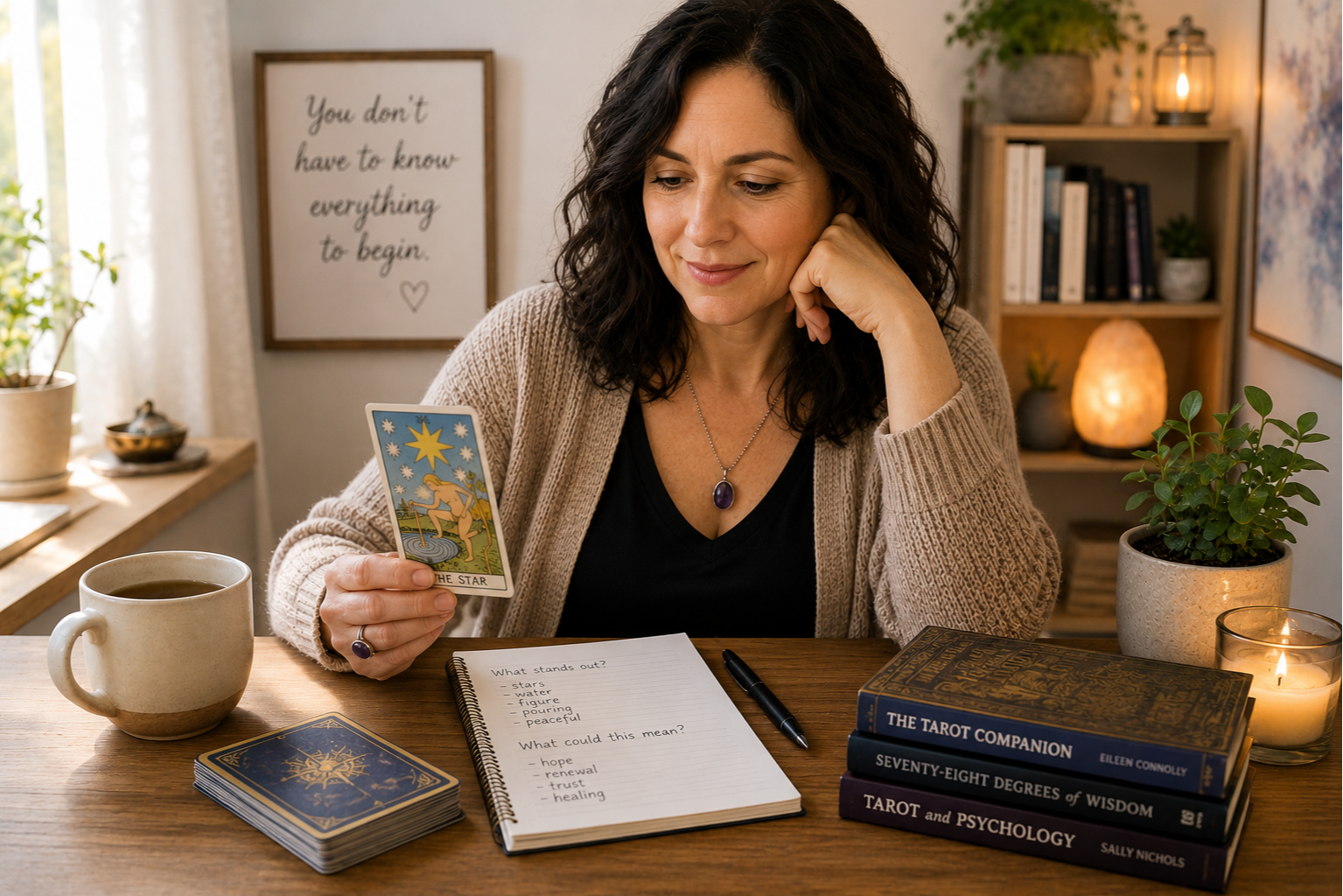
Imagine sitting down with a Tarot deck and pulling a card you don't immediately recognize.
Instead of reaching for your phone or opening three books, you stop.
You look.
You notice.
You begin working through what you're seeing.
Maybe you don't know the answer immediately. That's okay.
You have somewhere to begin.
You know what to consider next.
And little by little, an interpretation starts to take shape.
Not because somebody handed you the “correct” meaning.
Not because you memorized enough keywords.
And not because you crossed your fingers and hoped your intuition would take over.
Because you know how to work through a reading.
That's the kind of confidence we're building here.
Not:
“I know everything about Tarot.”
But:
“I can figure this out.”
Is the Amethyst Tarot Method Right for You?
This course is for you if...
- You're brand new to Tarot and have no idea where to begin.
- You've been reading for a while, but still second-guess your interpretations.
- You know plenty of Tarot meanings but struggle to decide which meaning fits the reading in front of you.
- You find yourself reaching for a book, website, or app before you've given yourself a chance to read the card.
- You sometimes wonder whether you're using your intuition or just making things up.
- You want to read reversals without memorizing another 78 meanings.
- You want to use AI as a tool for learning Tarot without asking it to do your readings for you.
- You want a practical way to build confidence by actually reading the cards.
You don't need previous Tarot experience.
You don't need to own 57 Tarot books.
You don't need special psychic abilities.
And you definitely don't need to wait until you feel completely confident before you begin.
That's what the practice is for.
This Probably Isn't the Course for You If...
You're looking for a course that gives you one fixed meaning for every Tarot card and tells you exactly what you're supposed to say when it appears.
It's also probably not for you if you want someone—or an AI—to simply give you the answer.
The Amethyst Tarot Method asks you to think.
You'll observe. You'll explore possibilities. You'll make choices. Sometimes you'll change your mind. Sometimes you'll disagree with me. You may even argue with your AI Practice Partner.
Good.
Because the goal isn't to make you dependent on another Tarot reader, another book, or another tool.
The goal is to help you become a better reader.
Ready to Start Reading Tarot?
You don't have to memorize everything first.
You don't have to wait until you feel intuitive enough, knowledgeable enough, or confident enough.
You can start with the cards you have and the knowledge you have right now.
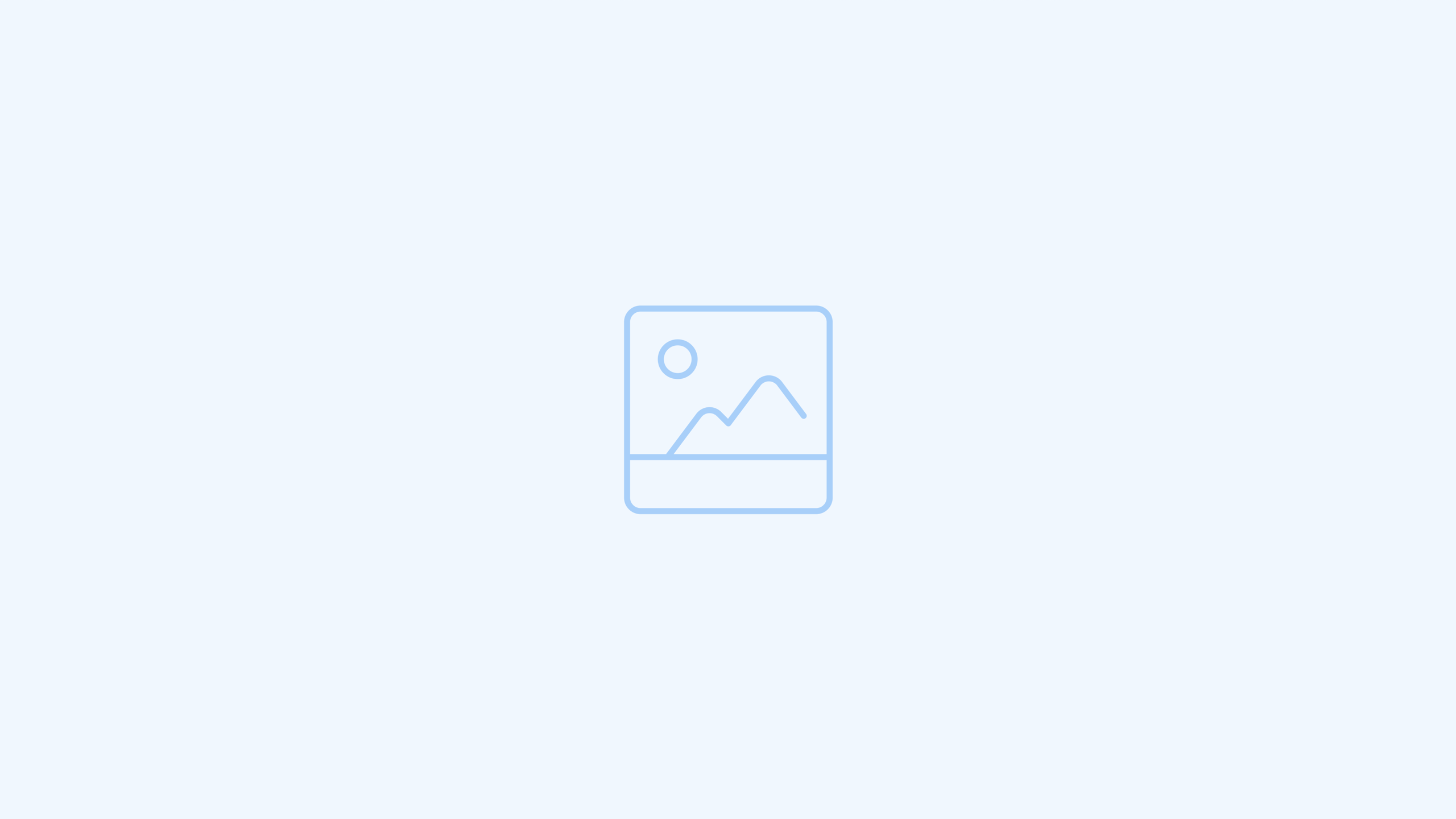
Inside the Amethyst Tarot Method, I'll teach you the same five-step process you can return to whenever you sit down to read—whether you're working with a familiar Rider-Waite-Smith card or a card you've never seen before.
You'll get the complete course, guided and independent practice, downloadable resources, accessible alternatives, and access to your AI Tarot Practice Partner.
The Amethyst Tarot Method
Learn to Read Any Tarot Card with Confidence
Lifetime Access $37
Enroll HereStart wherever you are. Bring a Tarot deck, something to write with, an open mind - and maybe a cup of tea.
Frequently Asked Questions
Do I need any Tarot experience?
No. The course is designed so that you can begin even if you've never picked up a Tarot deck before.
If you've been reading for years, you can use the same Method to work through readings when you're unsure which interpretation fits or find yourself second-guessing what you see.
Do I need a specific Tarot deck?
No. Bring whatever Tarot deck you'd like to work with.
In fact, part of the point is learning a process you can use even when you're working with a card or deck you haven't seen before.
Do I have to read reversed cards?
No.
But if you want to, there's a lesson showing you a simple way to work with reversals without memorizing another 78 meanings.
Do I have to use AI?
Absolutely not.
The AI Tarot Practice Partner is an optional tool included with the course. You can complete the Amethyst Tarot Method without using AI at all.
If you do choose to use it, you'll learn how to make AI part of your practice without allowing it to replace your own interpretation or your own thinking.
Is this a course about memorizing all 78 Tarot cards?
No - and deliberately so.
You'll encounter Tarot meanings throughout your studies, but this course focuses on teaching you how to read rather than asking you to memorize hundreds of definitions before you're allowed to begin.
How is this course different from Hello, Tarot?
Hello, Tarot! teaches you the foundational meanings of all 78 Tarot cards. The Amethyst Tarot Method teaches you how to determine which meaning applies to the card in front of you and your specific reading.
Is the course accessible?
Video lessons include captions and written transcripts, and course worksheets and guides include accessible alternative documents that can be read by screen readers or used for students who prefer to work digitally.
You Don't Have to Know Everything to Begin
There will always be more to learn about Tarot.
I've been reading for more than 35 years, and I'm still learning.
That's part of what makes Tarot so fascinating.
But you don't need to know everything before you pull a card.
You need somewhere to begin, a way to work through what you see, and enough practice to discover that you really can do this.
That's what the Amethyst Tarot Method is here to give you.
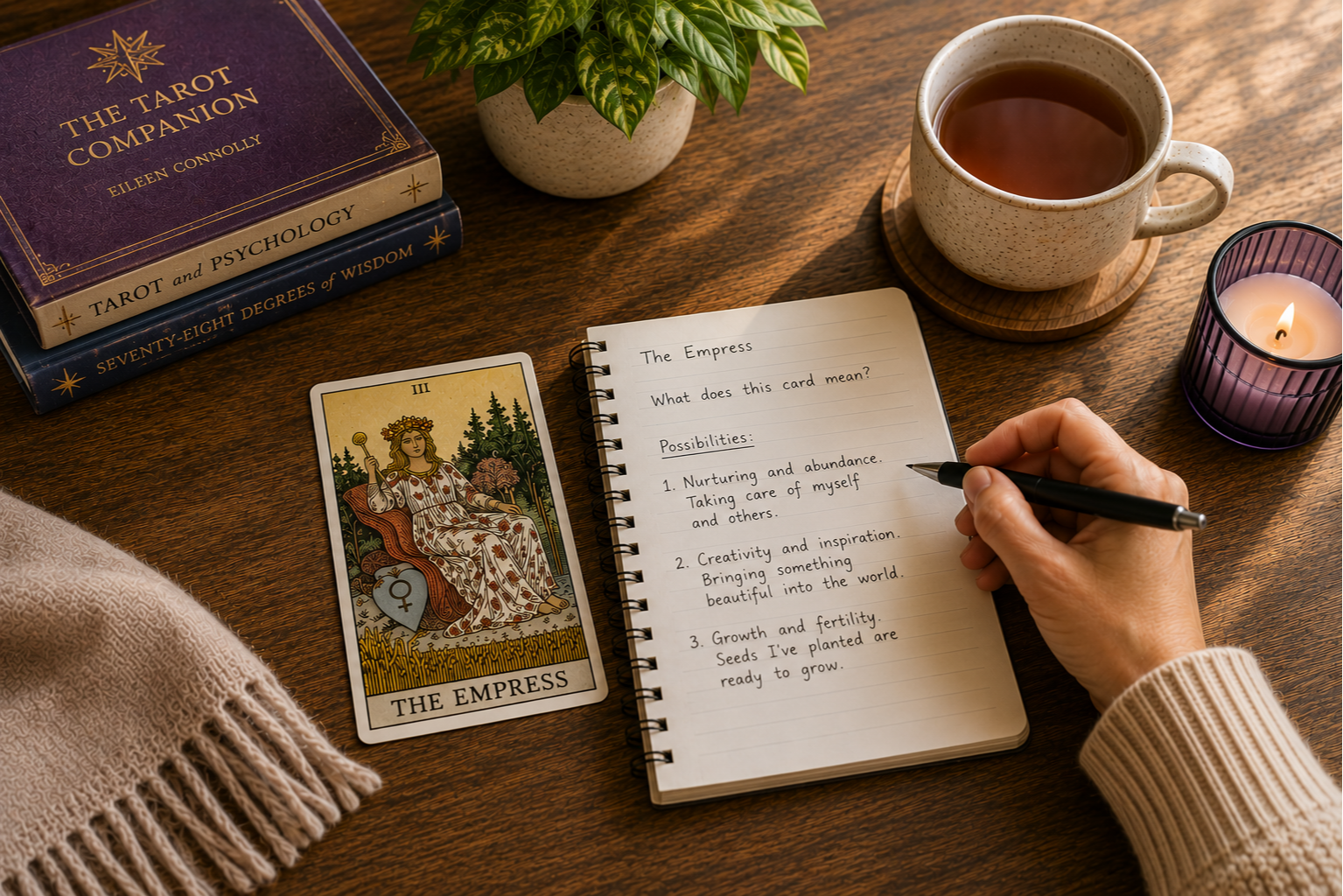
Your next reading doesn't have to begin with “What does this card mean?”
It can begin with:
“I can figure this out.”
Start Reading Tarot